
California SB 704 Explained: What Firearm Owners, Collectors, and Estate Sellers Need to Know About California’s Barrel Restrictions
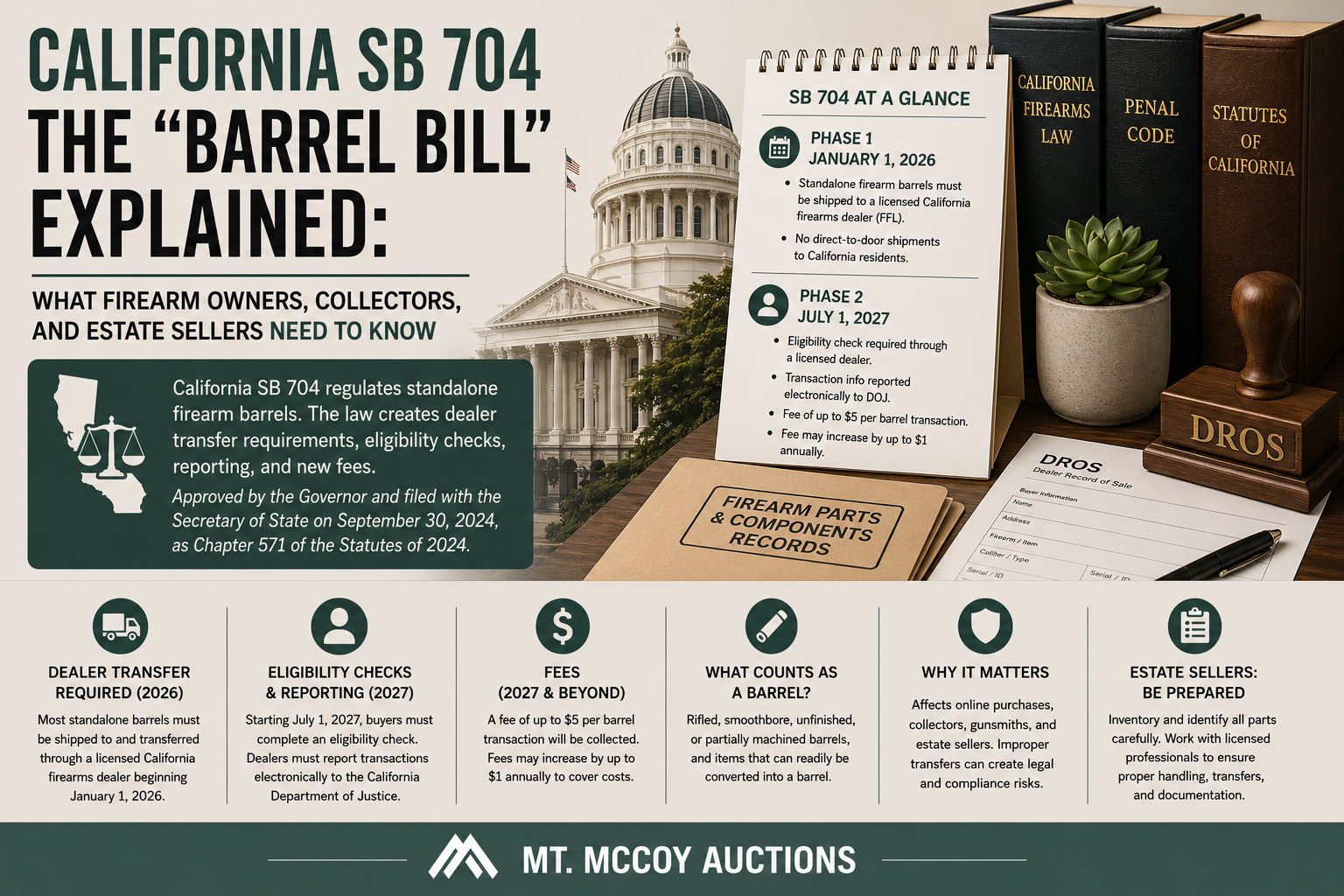
California firearm laws continue to expand beyond complete firearms themselves, and one of the most significant recent examples is California SB 704, a law focused on standalone firearm barrels and barrel related transactions.
For many firearm owners, collectors, and estate sellers, the law came as a surprise because barrels have traditionally been treated as ordinary parts rather than heavily regulated items. SB 704 changes that substantially by adding dealer transfer requirements, purchaser eligibility checks, electronic reporting, and new fees connected to barrel sales and transfers in California.
For anyone handling inherited collections, spare parts, or online firearm component sales, this is a law worth understanding.
What California SB 704 Does
SB 704 creates new restrictions and requirements surrounding the sale, transfer, shipment, and processing of standalone firearm barrels in California.
The law is implemented in phases, with major changes beginning in both 2026 and 2027.
In practical terms, California is moving firearm barrels closer to a DROS style regulatory process similar to what buyers already experience when purchasing complete firearms.
Phase One: Dealer Transfer Requirements Begin in 2026
Beginning January 1, 2026, most standalone firearm barrels can no longer be shipped directly to California residents in ordinary online transactions.
Instead:
barrels generally must be transferred through a licensed California firearms dealer
online sellers may need to ship barrels to an FFL rather than directly to the buyer
in person dealer processing becomes part of many barrel transactions
age and identity verification requirements expand
For many hobbyists and collectors, this is one of the biggest practical changes under the law.
Historically, firearm barrels were often purchased online and shipped directly to consumers without dealer involvement. SB 704 changes that process significantly inside California.
Phase Two: Barrel Eligibility Checks and Fees Begin in 2027
Beginning July 1, 2027, California expands the law even further.
At that point:
buyers must complete an eligibility check through a licensed dealer
transaction information must be electronically submitted to the California Department of Justice
dealer records must be maintained
a state fee of up to $5 per transaction is added
the fee may increase by up to $1 annually to cover administrative costs
This portion of the law is what many firearm owners refer to as a “barrel DROS” system because it begins resembling California’s existing firearm transaction reporting structure.
What Counts as a Firearm Barrel Under SB 704?
One reason SB 704 has generated so much discussion is because the law’s definitions are broader than many people expect.
The legislation reaches beyond complete finished barrels and may include:
rifled barrels
smoothbore barrels
unfinished barrels
partially machined barrels
barrel blanks
certain convertible or unfinished components
The bill also references certain materials or items that can readily be converted into firearm barrels through machining or manufacturing processes.
For collectors and estate sellers, this matters because many inherited collections contain:
spare barrels
gunsmithing components
military surplus parts
unfinished projects
storage bins full of unidentified firearm parts
Items that may have once seemed insignificant can now carry additional transfer and compliance considerations under California law.
Why Estate Sellers and Families Should Pay Attention
Estate situations are where laws like SB 704 often become especially confusing.
A surviving spouse, child, trustee, or executor may suddenly inherit:
rifles
handguns
shotguns
loose barrels
old parts bins
accessories
ammunition
gunsmithing tools
historical firearm components
Many heirs are not firearm experts and may not realize standalone barrels are now becoming increasingly regulated in California.
A loose barrel sitting in a garage toolbox or safe may suddenly require dealer processing or special handling before transfer or sale. Casual online sales or informal shipping arrangements that were once common may now create compliance risks.
The safest approach is slowing down and properly identifying what is actually in the collection before making decisions.
What Sellers and Collectors Should Be Careful About
One of the biggest mistakes people make is assuming all firearm parts are treated casually under California law. Increasingly, they are not.
If you are handling inherited collections or firearm related items:
do not assume loose parts are automatically unrestricted
do not casually ship barrels without understanding current California requirements
do not rely entirely on internet forum advice
do not rush estate liquidation decisions
do not post unidentified parts online before understanding what they are
Proper inventory, documentation, and professional review matter more now than many people realize.
Collectors should also remember that California firearm laws continue evolving through legislation, regulatory interpretation, and ongoing litigation.
How Mt. McCoy Auctions Helps
This is where experienced firearms auction and consignment support becomes especially valuable.
Mt. McCoy Auctions helps sellers identify collections, organize inherited firearms and parts, document items properly, photograph collections professionally, and help route transfers through the appropriate licensed process.
Many estate sellers are not looking to become experts in California firearms compliance overnight. They simply want to handle inherited collections responsibly, safely, and transparently.
A collection may contain:
collectible firearms
historical pieces
loose barrels
spare components
gunsmithing items
magazines
accessories
unidentified firearm related parts
Understanding what you have before attempting sales or transfers helps avoid unnecessary confusion and potential legal problems.
Bottom Line
California SB 704 is another example of California expanding regulation beyond complete firearms and into individual firearm components and parts.
For collectors, hobbyists, and estate sellers, the law is a reminder that firearm related items that once seemed routine may now involve dealer processing, reporting requirements, fees, and additional compliance considerations.
For families handling inherited collections, the smartest first step is usually slowing down, documenting the collection carefully, and working with knowledgeable professionals who understand both the collector market and California’s changing regulatory landscape.
Resources & Further Reading
California Legislative Information Portal – SB 704
https://leginfo.legislature.ca.gov/
LegiScan – California SB 704 Text and Bill History
https://legiscan.com/
California Department of Justice – Firearms Information
https://oag.ca.gov/firearms
Bureau of Alcohol, Tobacco, Firearms and Explosives (ATF)
https://www.atf.gov/firearms
National Shooting Sports Foundation (NSSF)
https://www.nssf.org/
California Rifle & Pistol Association (CRPA)
https://crpa.org/
Mt. McCoy Auctions
https://mtmccoyauctions.com/
Disclaimer
This article is for general educational purposes only and is not legal advice. Firearm laws and regulations change frequently, and individual situations vary. Always consult a qualified attorney or licensed firearms professional regarding specific legal or compliance questions.

